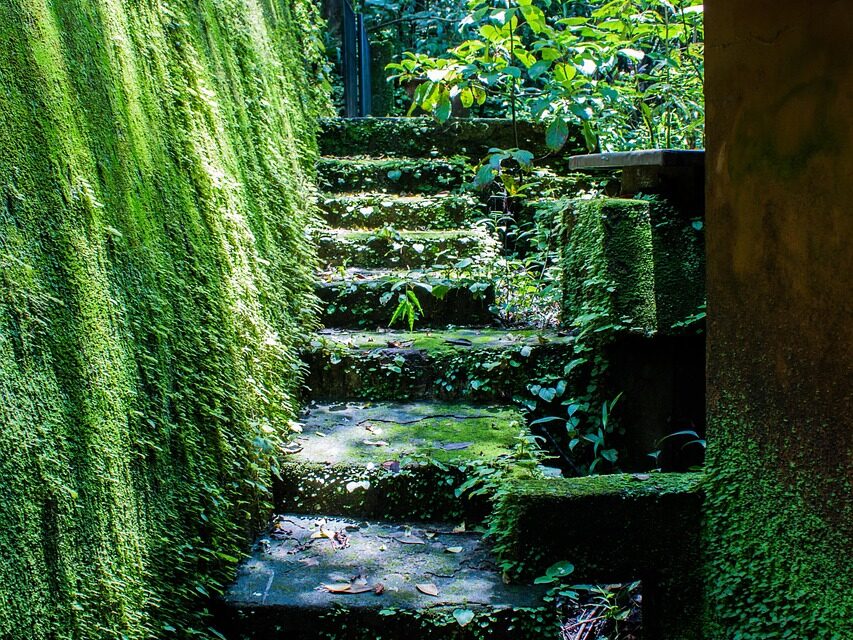
I didn’t go looking for The Ruins. Netflix’s algorithm put it in front of me on a night when I wanted something between horror and thriller, nothing that would keep me up, but not a cozy mystery either. From the thumbnail I figured it would be something like The Descent, a group of friends trapped somewhere remote with creatures picking them off one by one. It turned out to be a very different movie, and not quite in the way I expected.
Content note: The Ruins is rated R and includes graphic body horror, self-harm with a knife, an amputation, and gun violence. If any of that is hard for you, this one is an easy skip.
What The Ruins is about (no spoilers)
Two American couples are finishing a beach vacation in Mexico when they meet a German tourist, Mathias, whose brother has gone off to an archaeological dig at a Mayan ruin deep in the jungle. With a few days left and nothing better to do, they tag along, along with Mathias’s Greek friend Dimitri. The ruin turns out to be a vine-covered temple that isn’t on any map, and the moment they touch the vines, the locals with guns make it very clear that nobody is leaving.
The cast is Jena Malone as Amy, Jonathan Tucker as her boyfriend Jeff, Laura Ramsey as Stacy, Shawn Ashmore as her boyfriend Eric, and Joe Anderson as Mathias. It’s directed by Carter Smith and based on Scott Smith’s 2006 novel of the same name, and Scott Smith wrote the screenplay himself. It runs 90 minutes, which is the right length for what it is.
Less monster movie, more slow unraveling
The Ruins didn’t scare me, and I don’t think it’s trying to make you jump. There’s no creature lurking in the dark, and the thing doing the hunting is a plant. What it does instead is psychological. Once the group is stuck on top of the ruin, the movie becomes about thirst, injuries, panic, and people slowly turning on each other, and that part was more interesting than I expected from a 2008 horror movie I’d never heard of.
The scene that stuck with me most is the one where Stacy comes out of the tent at night while everyone else is asleep. She’s convinced the plant is growing inside her body, and she starts cutting herself open to get it out, covered in blood and completely past the point of reason. It isn’t a jump scare, it’s just deeply uncomfortable to watch, and it’s the moment the movie stops being about the vines and becomes about what fear does to a person.
Laura Ramsey is the reason to watch
Overall, I’d call the acting mediocre. Most of the cast is fine, but nobody really sells the terror, except Laura Ramsey. Her Stacy is the character who breaks first, and she’s the one who made me believe any of this was happening. There’s a scene where she’s knocking back some kind of brown liquor, whiskey or rum, and can feel the plant crawling inside her head, and she just cries out loud. It’s raw in a way the rest of the movie isn’t.
Shawn Ashmore’s Eric, her boyfriend, was a good character, which made it frustrating to see how he goes out. Without spoiling it, he deserved better than the movie gave him.
Jena Malone’s Amy is technically the lead, but she’s passive for most of the movie. She didn’t want to go to the ruins in the first place, and once they’re stuck there, she mostly reacts to what everyone else is doing. That might be on purpose, since she’s the reluctant one, but it meant the main character was the person I was least invested in.
Where it lost me
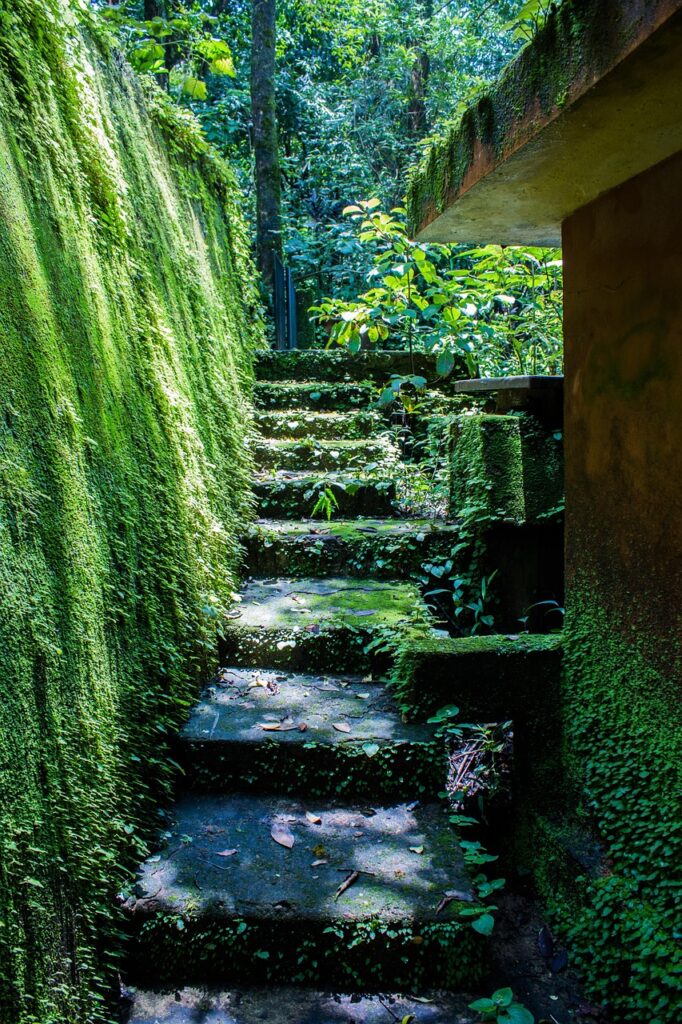
For me, the plants just didn’t land as the main horror. There’s a long stretch where the group ends up at the bottom of a shaft inside the ruin, and it should have been the scariest part of the movie. Instead it’s mostly vines reaching for people. I kept waiting for something more, a twist or a real escalation, and it never came. It felt like the movie had a great setting and a creepy idea and didn’t quite know how to make the idea frightening on screen.
That’s also where my Descent expectations hurt it. I went in expecting creatures, something physical you can see coming, and here the threat is a plant that’s simply everywhere. That should be unsettling, but for me it mostly felt a little flat.
What I kept thinking about afterward
I don’t know if this was the director’s intention, but I couldn’t stop noticing who the movie chose as its victims. The main characters are young, comfortable, a little spoiled, the kind of sorority and fraternity types who treat a foreign country like a backdrop for their vacation. They go to the ruins out of boredom and curiosity, and the whole movie is essentially them being punished for it.
I kept wondering whether that was a message to the audience, about tourists who wander into places they don’t understand, or whether it’s just how horror movies have always picked their victims. Either way, it’s the part of The Ruins that stayed with me longer than any of the gore did.
A little background
The Ruins was a box office disappointment when it came out in April 2008, making around $22.9 million worldwide on a $25 million budget. Like a lot of mid-2000s horror, it’s found a second life on streaming, and it’s turned up in Netflix’s recommendations for plenty of people who, like me, never saw it in theaters.
The people behind it are a slightly surprising mix. It was Carter Smith’s first feature film, after a career as a fashion photographer and a short film, Bugcrush, that won a short filmmaking award at Sundance. Ben Stiller is one of the executive producers, and the cinematographer is Darius Khondji, who also shot Se7en. And the Mexican jungle you see on screen isn’t Mexico at all: the movie was filmed in Queensland, Australia.
The book has a following of its own. Scott Smith is also the author of A Simple Plan, and fans of the novel often say the movie softened it, especially the ending. I’ll get into that in the spoiler section, because it actually answers the question I had when the credits rolled.
Is The Ruins worth watching?
If you want something thrilling and creepy, but not crazy creepy, this is for you. It’s more tension than nightmares, and the psychological side, people breaking down under pressure, is the strongest part.
If you’re looking for real scares, or a more dramatic horror movie with characters you care about, I’d skip it. And if the idea of a plant as the villain already sounds silly to you, the movie won’t change your mind. It didn’t fully work for me either. Also keep the content note above in mind, because the gore is brief but very graphic.
⚠️ Spoilers below
Stop here if you haven’t watched it yet.
The ending made me sad. Jeff, Amy’s boyfriend, sacrifices himself, walking out to distract the Mayan villagers so Amy can run for the Jeep, and he’s shot. Amy is the only one who makes it out. Before that, Stacy, deep in her breakdown, stabs Eric, and he’s dragged into the vines. For a good character, it felt like such a lame way to go. Afterward, Stacy begs to be put out of her misery, Amy can’t do it, and Jeff does.
What frustrated me most is what happens next, which is nothing. Amy escapes, and I wanted to know what that means. Did she carry the plant out with her? Does it grow outside the ruins now that someone got away? Instead, the movie jumps ahead and two guys arrive at the ruins calling out Dimitri’s name, and that’s the ending.
It turns out there’s a version that answers part of my question. The unrated cut has an alternate ending where Amy is driving away in the Jeep and you can see the vines moving under the skin of her face, which suggests she’s still infected and the plant is leaving with her. I wish that had been the main ending, because it’s exactly the payoff I was looking for.
The book goes even darker. In Scott Smith’s novel, Amy dies first and Stacy is the last one left, and nobody escapes at all. Carter Smith said at the time that ending the movie the way the book does would have been too bleak for audiences to bear, which is a pretty honest answer about why they changed it.