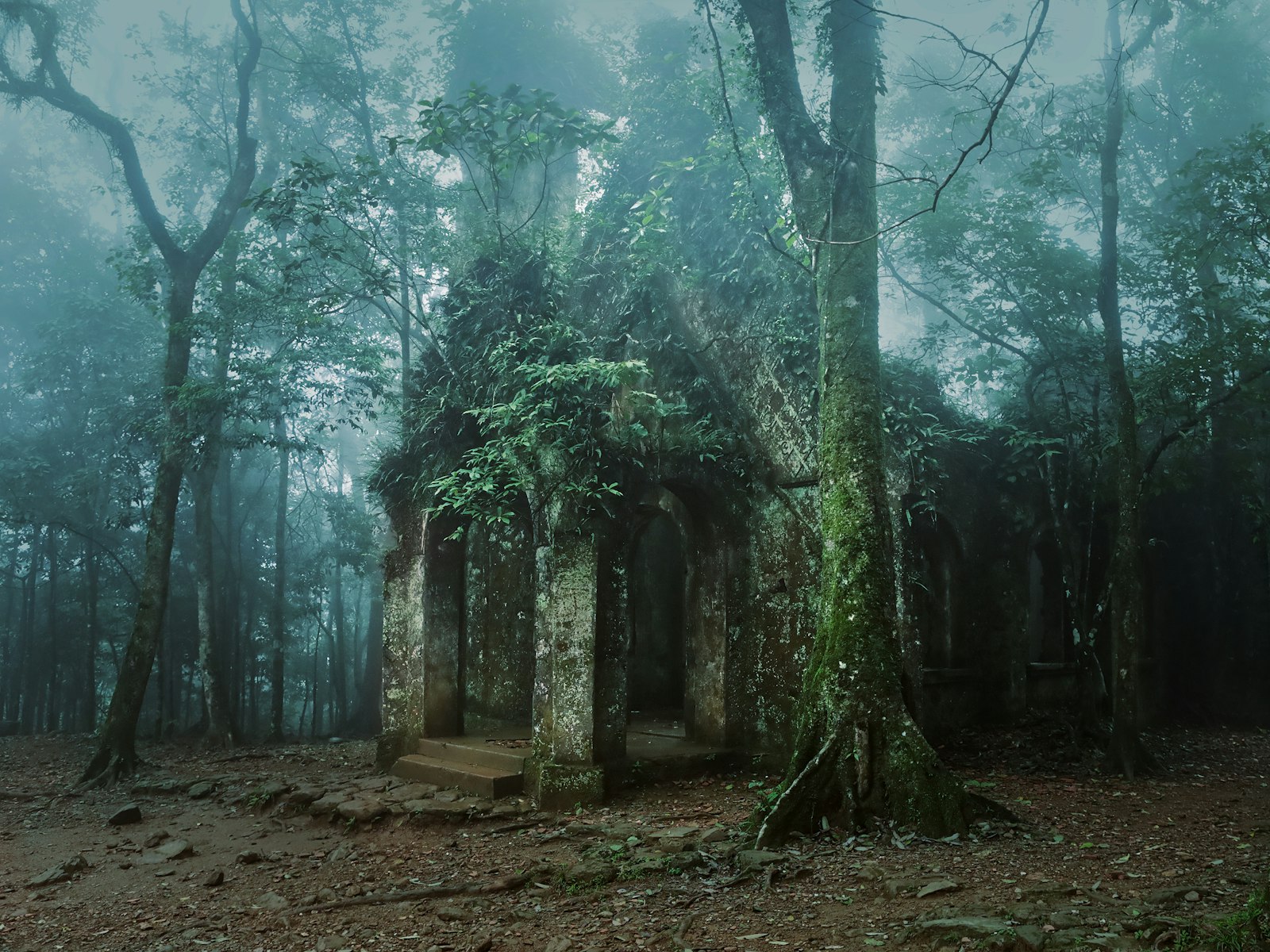
When the credits rolled on The Ruins, my first thought was, wait, that’s it? Amy gets away, and then the movie just stops without telling you the one thing I actually wanted to know, which is whether the plant gets out with her. So I went digging into the alternate endings and the book the movie is based on, and here’s everything I found, plus what I make of it.
Content note: this post discusses the full ending of The Ruins, including self-harm, a mercy killing, the killing of a child, and, in the book’s ending, a suicide. Nothing is described in detail, but if those topics are hard for you, feel free to skip this one. My spoiler-free review is linked at the bottom.
How The Ruins ends, in short
In the theatrical cut, the one most people will see on Netflix, Amy is the only one who makes it out. Jeff, her boyfriend, gives up his life so she can escape. She runs through the jungle with the villagers chasing her, reaches the Jeep, and drives away. Then the movie cuts to Dimitri’s two Greek friends walking through the woods, arriving at the ruins and calling out for him, and that’s the end.
That’s the whole ending. No scene of Amy back home, no sign of whether she’s infected, no explanation of what the plant is. If you finished the movie feeling like you missed something, you didn’t. It’s just not there.
Who dies, and in what order
Dimitri goes first, almost right away. When Amy accidentally steps into the vines at the base of the temple, the villagers get agitated and shoot him. That’s the moment the group realizes nobody is leaving.
Mathias is next, and his death is the slowest. The group lowers him into a shaft at the top of the ruin on a rope, it breaks, and the fall leaves him paralyzed. The vines start eating into his legs, and Jeff amputates them to stop the infection. In the end, the vines suffocate him.
Then comes the scene that stuck with me most from the whole movie. Stacy, convinced the plant is growing inside her, takes a knife and cuts herself open while the others are asleep. When Jeff tries to stop her she slashes his hand, and when Eric tries to calm her down, she stabs him in the chest. The vines drag his body away. Eric was a good character, and it felt like such a lame way for him to go, killed in a moment of panic by the person he was trying to help.
Stacy is overwhelmed by what she’s done and begs to be put out of her misery. Amy can’t do it, so Jeff does.
Jeff’s plan to get Amy out
This is the part that made me sad. Once it’s just Jeff and Amy left, Jeff comes up with a plan. He smears Stacy’s blood all over Amy, carries her down the steps of the temple as if she’s dead, and lays her on the ground. Then he walks out toward the villagers and provokes them so every eye is on him. Amy gets up and runs. Jeff is shot.
It’s a real sacrifice. After an hour of these people turning on each other, the last choice anyone makes in the main story is to give up his life for someone else.
Why the villagers won’t let anyone leave
The movie never explains the plant, but it does show you what the villagers believe. At one point, Amy throws a clump of vines at a young boy from the village in anger, and the villagers immediately kill him. They’re not guarding a temple, they’re guarding a quarantine. Anyone who touches the vines is treated as infected, and nobody infected is allowed to leave the hill.
That’s exactly why the ending bothered me. The whole movie is built on the idea that the vines can’t be allowed to spread, and then the one person who escapes might be carrying them. If the villagers are right, Amy driving away isn’t a happy ending at all. It might be the beginning of something much worse.
So does the plant spread? The unrated ending
The theatrical cut never answers that, but the unrated version gets closer. In its alternate ending, Amy is driving away in the Jeep, and there’s a close shot of her face with vines moving under the skin. She’s infected, and the plant is leaving the ruins with her.
Of all the versions, this is the one that comes closest to my question. It doesn’t show the plant growing in the outside world, but it at least tells you the danger didn’t stay on the hill.
The ringing phone: what the plant can do
One detail that’s easy to miss on a first watch explains a lot about the endings. Early on, the group hears a cell phone ringing from somewhere inside the ruin, and they assume it belongs to Mathias’s missing brother. That hope is part of why they go down the shaft in the first place. Later they realize the sound was never a phone. It was coming from the flowers on the vines.
So the plant doesn’t just grab people, it lures them in by copying sounds they’ll respond to. That’s what makes it more than a creepy weed, and it’s also the key to the cemetery scene below. Once you know the flowers can repeat what they hear, a grave that whistles back a tune isn’t random. It’s the plant, doing the same thing it did on the hill.
The cemetery scene (extended version)
There’s also a deleted scene used as an extended ending. Some time later, a caretaker is walking through a cemetery, whistling “Frère Jacques,” and hears the same tune coming back from one of the graves. It’s Amy’s. There are red flowers growing around her headstone, the same flowers as on the vines. He reaches for one, and the scene cuts to black.
This one made it worse for me. It tells you Amy didn’t make it, and it hints the plant is now somewhere new, but it still doesn’t show what I wanted, which is whether the vines grow and spread outside the ruins. It’s a creepy image, but it’s another tease instead of an answer.
The last scene: Dimitri’s friends arrive
In the theatrical version, the final shot is Dimitri’s two friends walking up to the temple looking for him. The idea is obvious enough: new people are about to walk into the same trap, and the cycle starts over.
For me, it felt like a non-ending. It’s weak, because the movie has given you no reason to care about these two guys, and it skips right past the one character you’ve followed the whole way. And it turns out the scene comes straight from the book.
How the book ends
Scott Smith’s novel, which the movie is based on, goes much darker, according to coverage of the book. Nobody escapes. The order is almost flipped from the movie: Amy, the most passive member of the group, dies first, after drinking too much, and the vines take her body. Stacy, the one who falls apart, is the last of them left alive on the ruin, and she ends up taking her own life in a place where her body would serve as a warning to whoever comes next. The vines drag it away anyway, and new tourists arrive.
That’s where the movie’s final scene with Dimitri’s friends comes from. In the book, it’s the punchline to a story where the plant wins completely. In the movie, it’s tacked on after Amy has already escaped, so it loses most of its weight.
Carter Smith has said he loved the book’s ending but thought audiences couldn’t have handled it on screen, which is a pretty honest answer about why it changed. And it’s worth knowing that Scott Smith wrote the screenplay himself, so the version where Amy gets away came from the author.
Which ending is best?
Knowing all of that, I’d still pick Amy getting out. The book’s version is bleaker and maybe more consistent, but after watching these characters suffer for 90 minutes, I wanted at least one of them to escape. Jeff’s sacrifice only means something if it works.
What I really wanted, though, was the next five minutes. Amy back in town, the vines under her skin, or a single green shoot somewhere it shouldn’t be. The unrated ending gives you a taste of that. The theatrical one leaves you with two strangers you’ve never met, calling out a name, and that’s where I wish the movie had trusted its own idea a little more.