If you’ve been struck by how The Scandal looks, you’re not imagining it. A lot of care went into the costumes, the sets, and even a hand-painted portrait, and knowing the thinking behind them changes how you watch the show.
The costume design
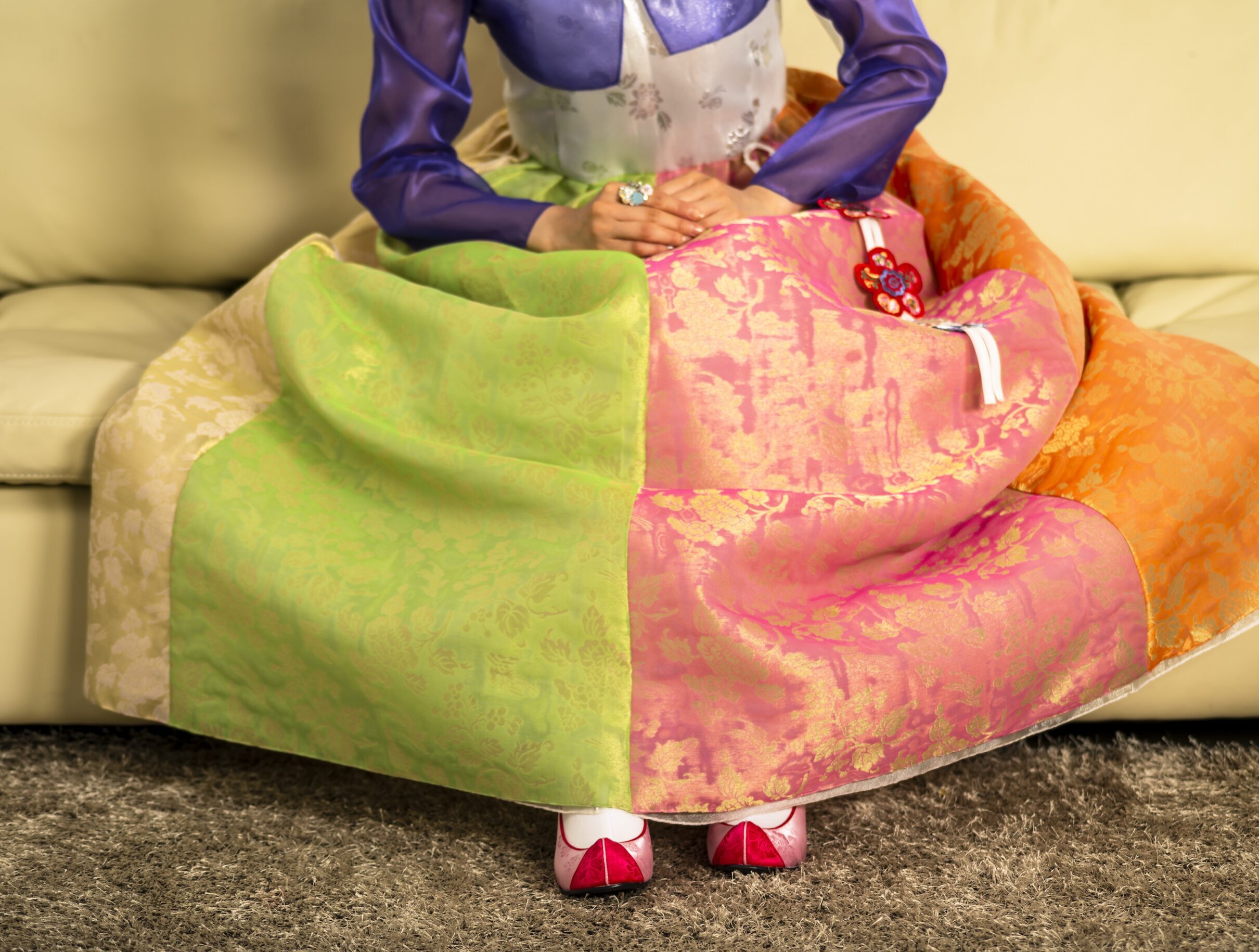
The costumes and visual direction came from Chai Kim, a modern hanbok label, led by designer Kim Young-jin. Each character’s hanbok is built around who they are, not just what a noble in that era might wear.
Lady Cho raises silkworms and makes her own silk, so her costumes lean into individuality and artistry rather than pure opulence. The team used five traditional fabrics and hand-embroidered a plum-blossom hanbok just for her silkworm scene. Plum blossoms traditionally symbolize a scholar, but here they’re repurposed to express her boldness. And her green tones get deeper as her emotions and desire intensify through the show, so if you go back and watch, her costume color is basically tracking her internal state.
Cho Won wears a wide-brimmed gat styled after the late 18th century trend of bigger hats signaling wealth and status, along with colorful thin sashes and light, flowing, cloud-patterned fabric that echoes his free, wandering personality.
Hui-yeon’s hanbok stays close to monotone, plain hemp and cotton, to express her restraint as a young widow. It’s the most visually quiet of the three, which fits her character.
The sets
Here’s a detail I didn’t expect: the hanok interiors use bright, freshly cut wood instead of the dark, aged wood most sageuk dramas default to. The reasoning is that a wealthy noble household would have built with the finest new wood available at the time, and that dark aged look we associate with “traditional” is really just what centuries of oil treatment did to preserve the wood, not how it originally looked. It’s a small choice, but it makes the whole world feel less like a museum and more like people actually lived there.
There’s also a self-ringing Western clock that shows up as a prop, meant to reflect how Western technology had started filtering into Joseon life by this period.
A hand-painted detail
Episode 1 features a portrait of Lady Cho’s mother-in-law that was actually hand-painted using traditional techniques by Professor Yoon Yeo-hwan, the same artist who painted portraits for the 2003 film. That’s a nice thread connecting the two versions.
How it compares to other sageuk
Compared to something like Mr. Sunshine, which blends Western and Korean elements more overtly through its plot, The Scandal keeps its Western touches subtle, mostly in props and background detail. And compared to The Handmaiden, which is famous for meticulous, painterly visual craft, The Scandal goes for something a little more modern and saturated in color rather than restrained.
Filming took place largely around Bukchon in Seoul, and it shows. The production stills lean into that neighborhood’s classic look, layered with a more modern sensibility than a strict traditional sageuk would use.