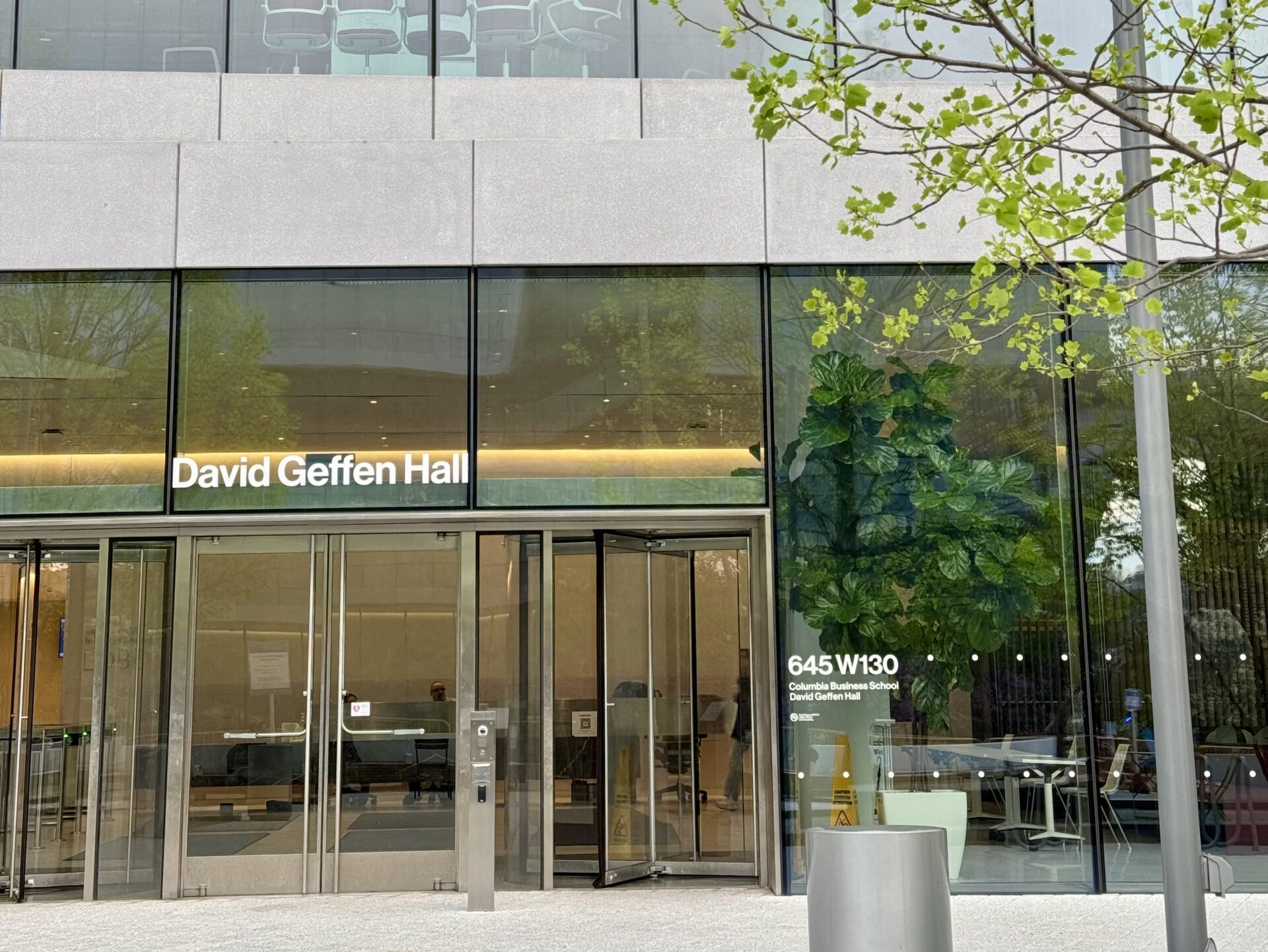
I’m 14 years into my career, working full time, and two terms away from finishing my Executive MBA at Columbia Business School. If you’re thinking about applying this fall, here’s the honest version: it’s been one of the best decisions I’ve made, and also the busiest time of my life, by a lot. I underestimated the workload going in, and some weeks I’m just surviving day by day. Here’s what it actually looks like, and what I’d want to know if I were in your shoes.
Why an EMBA, and why Columbia
Quitting my job for a full-time MBA was never an option, so it came down to which part-time format fit my life. NYU only had a part-time program on weeknights, which didn’t work for me. Columbia had a Saturday EMBA program, with class almost every Saturday, and that fit. I’d also already gone to NYU for undergrad, and I wanted a top school and a new network.
My goals were pretty clear: grow as a leader, get real depth in areas like finance where I didn’t have much background, and explore whether entrepreneurship could be a path for me someday. I’m keeping my career very open, and the program has been great for that.
EMBA vs. MBA vs. Columbia’s new Professional MBA
If you’re researching Columbia right now, you’ll see three formats, and the differences really come down to career stage and schedule.
| Full-Time MBA | Professional MBA | Executive MBA | |
|---|---|---|---|
| Typical experience | About 5 years | About 5 years | About 10+ years |
| Schedule | Full time on campus | Weeknights plus intensive block weeks | Weekends (Fri/Sat format) |
| Length | 16 to 20 months | 8 to 10 semesters | About 2 years (6 terms in my program) |
| Keep your job? | No | Yes | Yes |
| Best for | A major career switch | Mid-career professionals building momentum | Senior professionals and leaders |
The Professional MBA is brand new, with its first class starting in fall 2027. It’s essentially a part-time MBA on weeknights. From what I understand, it costs less than the EMBA, but it has less flexibility in class choices and a lower work experience bar. The bigger difference is the room: an EMBA class is full of people with a decade or more of experience across very different industries, and that’s a huge part of what you’re paying for.
One insider note: the Saturday-only format I’m in is being phased out. Going forward, the New York EMBA runs on the Friday and Saturday schedule.
What a week actually looks like
The program has six terms, and the first three are the hardest, with the most rigorous coursework, the heaviest homework, and the steepest learning curve on balancing work, school, and life.
Saturday is a full day of class, 8:30 am to 6:45 pm, usually followed by a networking event. Sunday is homework and reading day for the week ahead. Monday through Friday I’m working full time, and I’m usually finishing leftover homework on about two weeknights. The only real breaks are term transitions, when you get two Saturdays off in a row.
Then there’s a whole other side nobody fully warns you about: the social calendar. Between networking events, small group dinners and drinks, and student club activities, my calendar stays full. It’s genuinely one of the best parts, but it all adds up. What gives first when things get this busy? For me, honestly, it’s been taking care of my health and mental energy.
The classes that changed how I work
Leadership and Organizational Change is the one I’d single out. It helped me figure out the values I actually live by, and it changed how I approach leadership and my day-to-day at work.
Strategy Formation was all cases, real decisions companies made, the why behind them, and whether they worked. It’s the class that made me think differently about every business decision I read about.
Private Equity Finance was exactly the finance depth I came for. PE touches almost every company and career in some way, and building models and writing investment committee memos made it real.
Corporate Innovator, which I’m taking right now, is about what it takes to get an idea from concept to reality inside a big company’s maze. If you’ve ever had a good idea die in a meeting, you’ll get it.
The cohort is the real reason to go
Being in a room with people from completely different industries and levels opened my eyes and pushed me to look beyond what I do every day. Some classmates have clear goals and some don’t. Some pivoted or got promoted halfway through the program, some are still figuring it out, and some left their jobs.
What I craved most, and the reason I joined, was being part of a group that’s just as motivated and passionate about their careers and lives. That’s exactly what I got. You also overlap with the Global EMBA and Friday/Saturday classmates from the years before and after yours, so your network keeps growing.
The international seminar is worth it
The international seminar is one of the highlights of the whole program. You take world-class education across a border, hear from successful local leaders, and learn about a city’s culture, history, and economy in a way you never would as a tourist. Mine was in Cape Town, and I wrote about the trip here: A week in Cape Town, my first time in Africa!
Many classmates also take courses at London Business School, which people consistently call another highlight. I haven’t done it myself, but it’s worth looking into.
The hard parts
The hardest part is keeping my sanity, honestly. On top of the program, I’ve been thinking hard about what’s next in my career and putting myself out there, which means hearing a lot of no’s. Staying motivated through that has been really hard.
The program also forces you to face yourself and your reality, what you value, what you’re actually good at, and what you want. Few people get that kind of opportunity, and it’s not always easy to process.
If you’re applying this fall
Expect the busiest time of your life. If you’re married, be ready for a few intense arguments, half joking, because you’ll be on edge a lot.
Figure out your tradeoffs before you start: what you’re giving up, and for what. Outsourcing cleaning might buy you two or three hours a week, and those hours will feel like gold.
And don’t try to show up to every event or join every club. You’ll burn out fast. Move with intention.
Would I do it again? Yes. Just with a much more realistic idea of what I was signing up for.