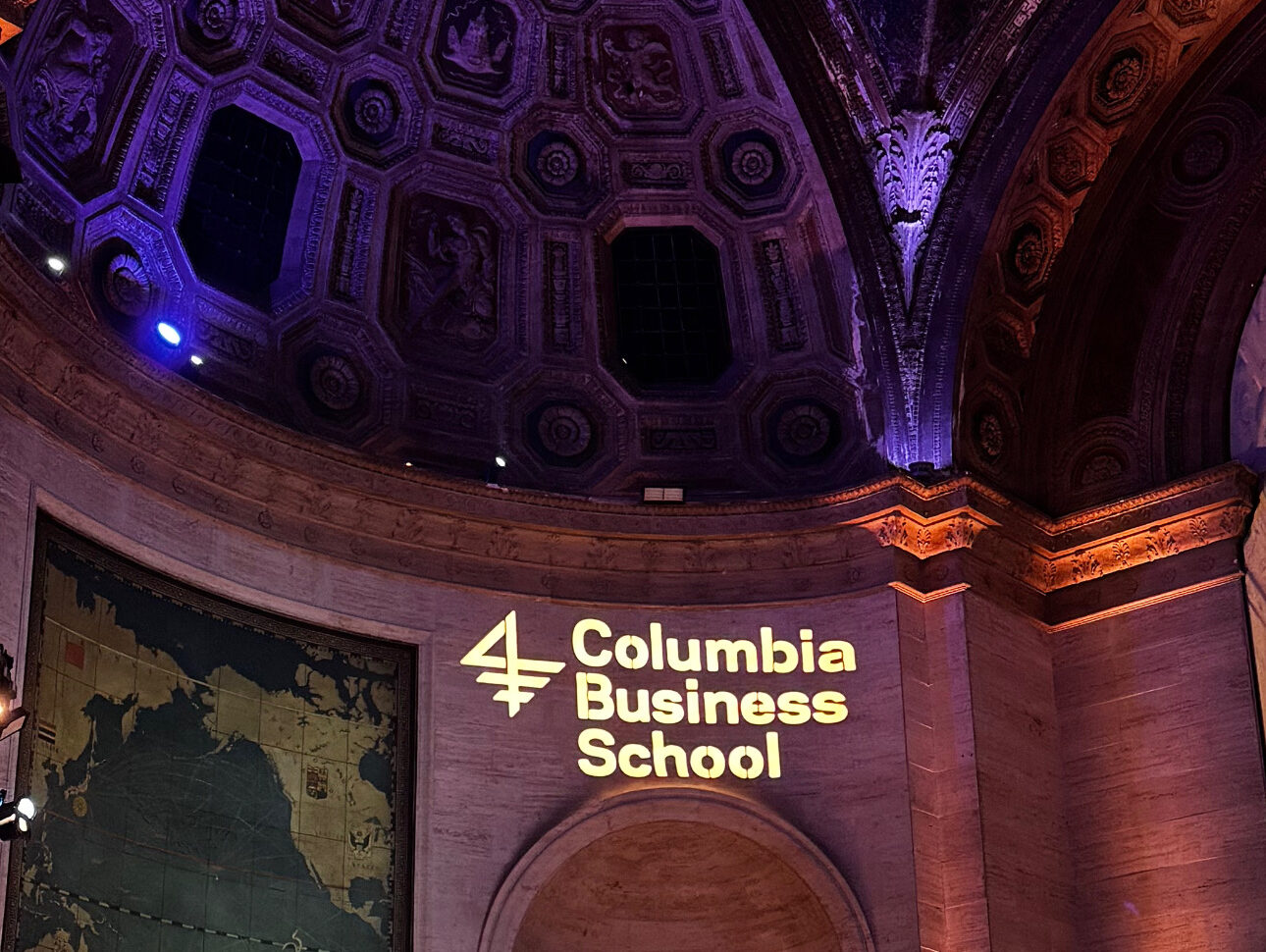
A few weeks ago, I wrote about what it’s actually like doing a Columbia EMBA while working full time: the schedule, the classes, the hard parts. This is the follow-up I wish I’d read before I applied. I’m two terms away from finishing, and the tuition is quite hefty, but I still believe this program is one of the best choices I’ve made in my life, mostly because of how much it has opened my eyes.
So this post is less about logistics and more about what changed in my head. Here are the three things that surprised me most, the class that’s shaping how I think about work right now, what I’d do differently if I started over, and my take on who should go and who should wait.
Quick context on the program
If you’re new here, I’m in Columbia Business School’s Saturday EMBA. Class runs all day on Saturdays, roughly 8:30 a.m. to 6:45 p.m., across six terms over about two years, and you keep your full-time job the whole way through.
One thing to know if you’re applying now: the Saturday-only format is being phased out, and the New York EMBA is moving to a Friday and Saturday schedule. The experience I’m describing below is still very much the same, though, since it’s mostly about the people and the classroom, not the calendar.
Surprise 1: Bold career moves are more common than I thought
Going in, I thought of big career pivots as rare, the kind of thing you read about but don’t sit next to. It turns out people making bold moves in their careers are not uncommon at all. My classmates come from such wide-ranging backgrounds that just hearing their stories widened my vision.
Some have changed fields entirely, some are building companies on the side of demanding careers, and some outgrew their jobs and quit, either to recharge or to get ready for the roles they really want next.
Being around people like that made me realize that potential is much bigger than I’d been allowing myself to think. When the people sitting next to you on Saturdays have already reinvented their careers, your own “what if” starts to feel a lot less far-fetched.
Surprise 2: I’m really good at saying no
I used to scoff at people who said they slept only a few hours a night or hadn’t had a proper rest in ten years, all in the name of success. Now I’m living that life. Between work, class, homework, and everything around the program, I’m being challenged physically and mentally at the maximum. I never thought this kind of crazy schedule existed, and there’s no break for my brain.
What surprised me is how good I’ve gotten at saying no. I say no to almost everything that’s “just for fun” or “just because,” and I do it to protect my time and my rest. It’s not that I don’t want to go, it’s that every yes costs something I can’t easily get back.
I wouldn’t call that a glamorous lesson, but it’s a useful one. Learning to guard your time this hard is a skill I’ll keep long after graduation, even when the calendar finally loosens up.
Surprise 3: Getting buy-in is the hard part of leading
I always knew people’s viewpoints were diverse. What I didn’t fully appreciate until this program is just how diverse, to the point where there’s no way to get everyone to agree on the same thing. A classroom of experienced professionals from completely different industries will show you that very quickly.
That changed how I think about leadership. Becoming a leader or an influencer isn’t about having the best idea. It’s about how you communicate your idea and convince others to buy in, and that’s the hard part that most leaders fail at.
The way I’d sum it up: in short-term relationships, perception is reality. In long-term relationships, genuine, caring people win.
The class shaping how I think right now: Corporate Innovator
I covered a few of my favorite classes in my first EMBA post, but the one on my mind right now is Corporate Innovator, the Napoleon’s Glance class. It’s still ongoing, and it’s already shaping how I think about work.
The course is taught by William Duggan, a senior lecturer in Columbia’s Management Division who has written several books on innovation and strategy, including Napoleon’s Glance (2002), Strategic Intuition (2007), and Corporate Innovator (2024), which the course builds on. The core idea is what he calls strategic intuition. It borrows the military term coup d’oeil, or “glance,” for the moment a good idea comes together in your head. His point is that new ideas don’t come out of nowhere. They come from your brain combining things you’ve already seen and stored in memory, often when your mind is clear. The classic example is Napoleon recalling a tactic Joan of Arc once used before an important battle. The term itself goes back to Carl von Clausewitz, the Prussian military theorist, who used coup d’oeil to describe a commander’s ability to grasp a situation in a single look. Duggan has also taken the idea beyond the military and corporate world. He co-wrote Think Bigger (2023) with Columbia professor Sheena Iyengar, about using the same approach to solve big problems in work and life.
The book behind the class, Corporate Innovator: A Guide Through the Labyrinth, starts from a simple observation: good ideas often come from people inside an organization, not just from the executives at the top, but those people run into bureaucracy and power dynamics that kill ideas before they get anywhere. The book walks through how to communicate a new idea, win allies, get buy-in, and handle resistance, drawing on psychology research about how people react to new ideas, plus historical cases and interviews with successful corporate innovators.
The syllabus splits the course into three parts. The first two sessions cover strategic intuition and the neuroscience of how ideas form, plus how other people react to a new idea. The next seven sessions are what the course calls the labyrinth: the path a new idea has to travel through the specific people in an organization who matter for it. Each of them likes it, ignores it, or actively opposes it, and that path is mostly invisible from the outside. Because corporate innovators rarely share how they actually got past resistance, the class uses historical cases plus recent interviews with a few innovators who were willing to talk. The last three sessions apply the same tools to your own career and personal life, which is an even messier labyrinth than any single company.
If that sounds a lot like my third surprise, that’s because it is. This class is giving me a framework for the exact thing I realized I needed: not just having ideas, but getting them through the people who decide whether they live or die.
What I’d do differently
First, I’d actively source course feedback from previous cohorts before signing up for electives. Professors are super important here. They shape how engaged the class is and the whole narrative of what you take away, and the right professor can make a class genuinely eye-opening.
Second, I’d get involved in programs like Pangea. Pangea Advisors is Columbia Business School’s pro bono international consulting group. Each semester, student teams are matched with social enterprises, both nonprofit and for-profit, working to improve lives in the developing world, and they complete a consulting project with support from a faculty or professional mentor. Clients span different countries and industries, so it’s real-world work, not a classroom simulation. EMBA students can join too, by forming their own team. I’d do it both to support humanitarian causes and to build my skills in influencing organizations, which, as you can probably tell by now, is the theme of my whole EMBA.
Who should go, and who should wait
If you’re up for living the busiest time of your life, and you’re feeling bored or stuck in your career, go for it. Put your full effort into it and immerse yourself fully. You get out of it what you put in.
If you lack clear goals and intentions in your life right now, maybe wait until you have them. Without clarity on where you want to go, you won’t know how to make the best use of everything the program offers, and there’s a lot on offer.
And obviously, if you can’t afford it, including what it would take to pay down debt later, don’t go. My program cost $255K, and it’s only going to go higher from here, so it’s worth being honest with yourself about that part before anything else.
For me, it’s been worth it. Not because it made my life easier, because it really didn’t, but because of how much bigger my sense of what’s possible has gotten.